
Student Tiffin Delivery in Toronto: Residence Handoffs That Work
Plan student tiffin delivery in Toronto around residence access, class schedules, meal conditions, direct handoffs and subscription pauses.
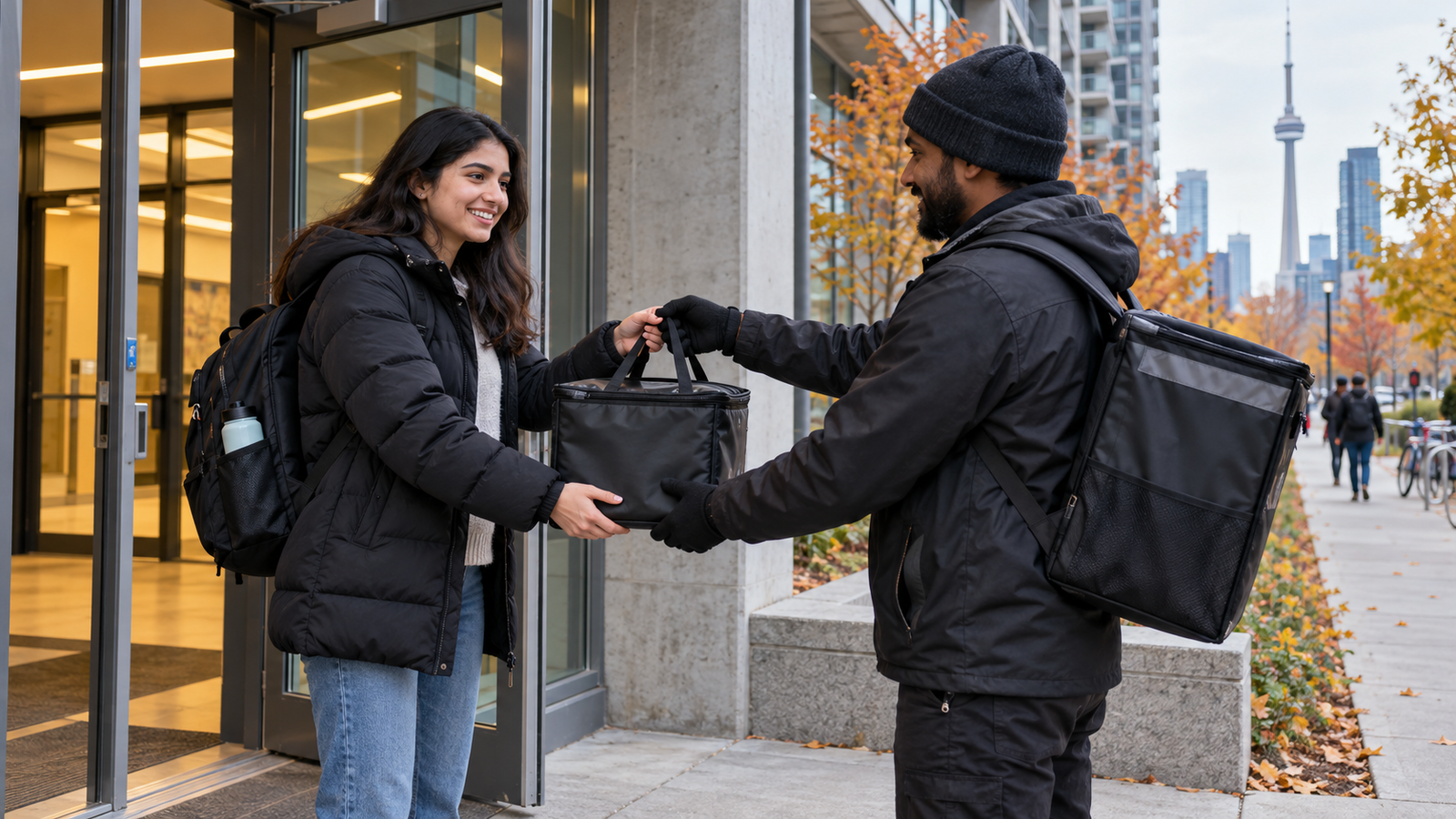
A student has a lab until 6 p.m. and orders a tiffin meal for that evening. The kitchen cooks on time, the driver reaches the residence at 5:45, and the front desk says it cannot take perishable food. The student sees the missed call at 6:10. Everyone followed a piece of the plan. Nobody planned the actual handoff.
Student tiffin delivery in Toronto is a specific kind of repeat route. It crosses class schedules, residence access rules and the limits of prepared-food transport. This article focuses on campus and residence receiving. For the broader weekly route, subscription pause and container-return system, read our tiffin and mess subscription guide.
Do not assume a residence desk can receive dinner
Residence buildings vary, and policies change. A student may have a mailing address that is perfectly valid for parcels but unsuitable for a hot dinner. Ask whether food couriers can enter, whether reception accepts food, where the student should meet the driver and whether the meeting point is accessible after hours. The delivery address should name the building entrance rather than only the campus.
For example, the University of Toronto New College residence services page says its front desk does not accept perishable food or flowers. That is a concrete reminder to check the student's own residence rules. It does not mean every Toronto college has the same policy. A tiffin provider should never promise “leave it at reception” as a universal fallback.
Ask for the student's mobile number, preferred entrance, building name and a short meeting instruction. If the student uses a different name on the intercom, record the name they are comfortable sharing with the driver. Keep private details out of a public-facing label. A courier needs enough information to complete the handoff, not a full student profile.
Offer a window that fits classes, not only kitchen output
The kitchen may finish every meal at the same time, but students do not leave class together. A 5 to 6 p.m. handoff may work for one building and fail for another where labs end at 6:30. Before accepting a subscription, ask the student when they can reliably meet a driver. Offer a realistic evening window and a cutoff for changes. If a particular campus can only be reached earlier, say so clearly.
Route design is still important. Grouping several orders at one campus or in nearby neighbourhoods can make a regular service workable, provided each student understands when to come outside. A text that says “arriving soon” should be sent with enough lead time to reach the entrance, not after the driver has already begun a short wait. Where appropriate, a shared pickup point can work, but only if the school permits it and the food can be handed directly to identified customers.
Do not treat a missed class notification as permission to leave a meal on a bench. The tiffin business should choose a clear procedure: contact the student, allow the agreed wait, notify dispatch and follow the product-specific safety plan. A meal that has been sitting out cannot simply be moved to tomorrow's run. The shop must decide whether redelivery, refund or replacement is possible under its stated terms.
Keep the food and the container plan honest
Prepared meals can have different temperature needs. The food business is responsible for determining safe preparation, packaging and transport conditions, and should tell dispatch if insulated or temperature-controlled handling is required. A standard courier booking is not automatically a heated or refrigerated service. Sealed containers should resist leakage and be identifiable without opening them. Label the order reference and meal count so the driver can hand over the correct bag.
If the business uses reusable tiffin containers, decide whether empty containers are collected on the next visit or returned to another point. Give students a clear deadline and a simple label method. A driver should not have to sort unlabeled boxes in a residence lobby. Track deposits or missing-container charges separately from meal fees so the subscriber knows what they are paying for.
For students with allergies or dietary restrictions, keep meal selection and ingredient questions between the customer and the kitchen. A driver cannot verify that a meal is nut-free or vegan by looking at a sealed lid. If a wrong meal is noticed at handoff, the student should have an immediate way to contact the provider rather than asking the courier to exchange food between customers.
Make subscriptions flexible enough for student life
Students go home for reading week, stay late for exams and change residences between terms. A subscription should state how far ahead they can pause, change a meal day or update an address. The deadline should match the kitchen's purchasing and cooking schedule. “Cancel anytime” sounds generous, but it becomes confusing if today's meals were already prepared. A simple calendar and a written cutoff are more useful.
At signup, collect a primary residence address and an approved alternative only if the route can serve it. A student who moves from downtown Toronto to Mississauga may be outside the original delivery zone. Reconfirm the price and window before the next meal, not after the driver is dispatched. If a student wants to skip a day, confirm whether they receive a credit, a later meal or no adjustment according to the plan they chose.
Many students use the same order every weekday. That is convenient until the provider assumes last week's schedule is still current. Send a weekly reminder before the change cutoff, especially near exam periods and holidays. The reminder should be easy to answer from a phone. An elaborate portal is less useful than one clear way to say “pause Thursday.”
Build the handoff note before the first meal
One concise route note can prevent repeated failures: building name, exact meeting entrance, delivery window, student phone, order reference, meal count, accessibility note if volunteered, and no-answer procedure. Test the address on a real map. On a large campus, the main mailing address may place the driver far from the student's door. The student should be able to recognize the meeting point without searching a vague pin.
After the first delivery, ask one question: “Was the meeting point easy to find?” If not, revise the instruction before the next run. Keep proof of handoff proportionate, such as a timestamp and confirmation from the recipient. Avoid photographing students without a clear need. If your provider handles other repeat deliveries, a scheduled route can help keep pickup and stop order predictable, but the student receiving instructions still matter at every stop.
Frequently asked questions
Can a Toronto residence front desk accept a tiffin meal?
Do not assume it can. Check the specific residence policy and ask the student to provide an approved meeting point. Some desks do not accept perishable food, so a direct handoff outside may be required.
What if a student is in class when the driver arrives?
Use the agreed no-answer procedure, including a contact attempt and a defined wait. Do not leave prepared food unattended by default. Explain the provider's redelivery or replacement policy before the subscription starts.
Can a student pause meals during exams or reading week?
Yes, if the plan allows it and the student submits the change before the kitchen's stated cutoff. The provider should confirm whether skipped meals become credits, replacement dates or another arrangement.
Should tiffin containers be collected by the courier?
Only if collection is part of the agreed route. Label the empties, define a collection point and tell the student whether any deposit applies. Do not assume the driver can wait while a student searches for containers.
Can one courier serve several campus buildings?
Often, if the route and meal conditions permit it. Each building still needs its own entrance, receiver instructions and time window. A campus name by itself is not a complete delivery address.
A dependable student meal service makes the handoff easy to understand before the driver arrives. For the business side of repeat meal routes, see our subscription delivery guide; for another food seller's direct-order process, read the small food business guide. If you are planning a campus route, share the pickup and building entrances for dispatch review.