
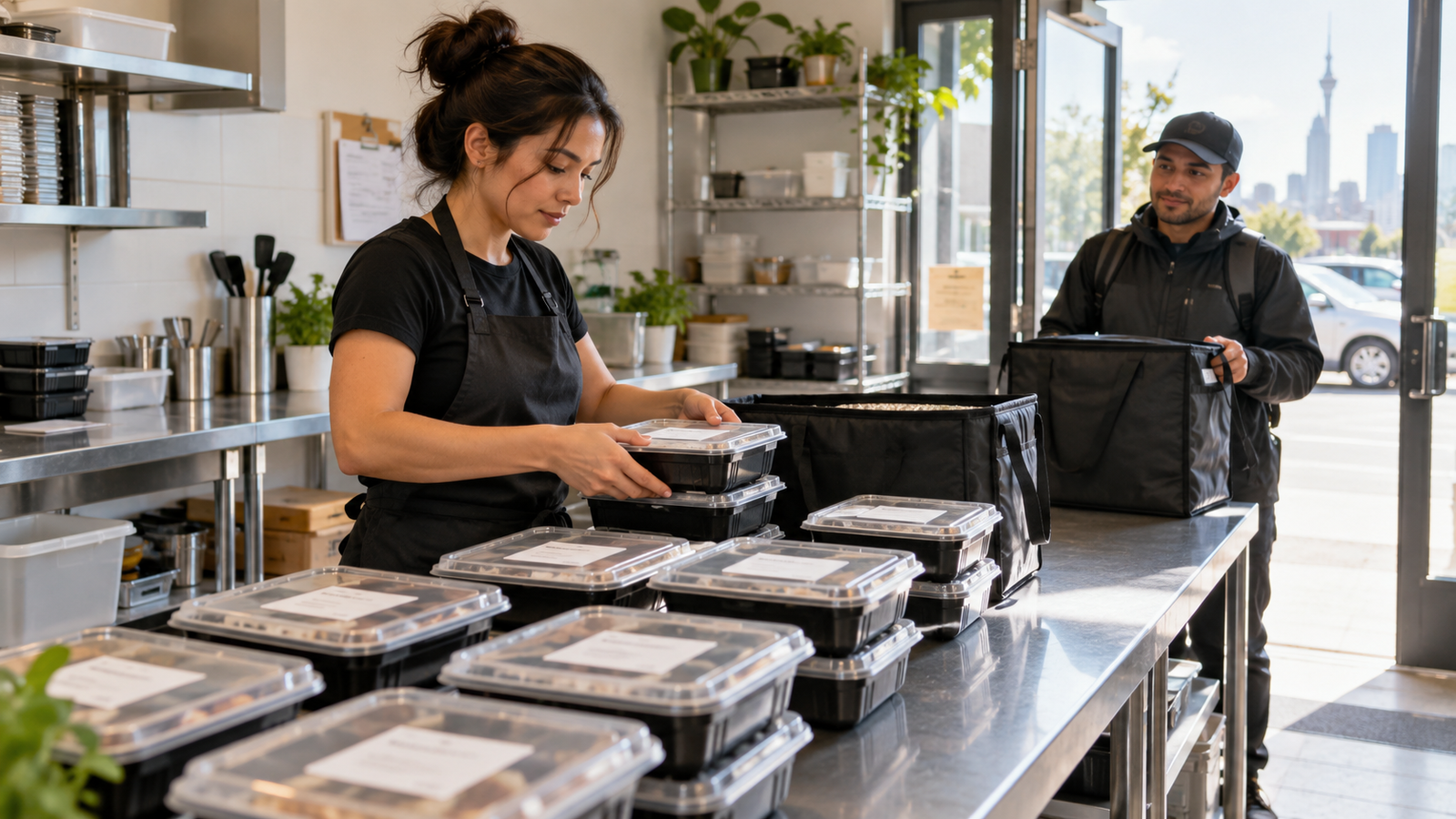
Meal-Prep Delivery Across the GTA: Build a Recurring Route That Holds Up
Plan recurring meal-prep delivery across the GTA with stop grouping, cutoff times, customer instructions, temperature controls and exception handling.
Monday’s meal-prep run looked simple on Friday: twelve customers, two neighbourhood clusters, one pickup. By Monday morning, one address had changed, a customer requested a later arrival, and a building concierge said food could not be held at the desk. Recurring delivery is valuable because the plan repeats. It can also fail when the plan is treated as unchangeable.
For GTA meal-prep kitchens and specialty food producers, a reliable weekly route needs a cut-off for changes, clear stop data and a decision about products that require temperature control. The goal is not to squeeze in the most addresses. It is to deliver each order in the condition and window the customer was told to expect.
Build the route from real customer windows
Start with the kitchen’s realistic release time and each customer’s receiving window. Group nearby stops only after identifying hard constraints such as office closing times, condo access hours or a customer who must receive the order personally. A North York-to-Markham cluster may be sensible on a map but not if one stop needs an early handoff and the rest cannot receive until late afternoon.
Keep a route sheet with the order reference, exact address, unit or buzzer, recipient phone, number of packages, delivery window and a brief exception note. Review it before every run. A recurring route is a reusable template, not permission to ignore this week’s changes.
Set a change cut-off your kitchen can honour
Customers need to know when they can edit an address or delivery instruction. Your team needs enough time after that cut-off to update labels, packing lists and dispatch. A late change may still be possible, but it should trigger a new confirmation rather than silently appearing in a message thread. Otherwise, the kitchen label, courier stop list and customer expectation can disagree.
Separate three types of changes: product changes before production, address changes before route finalization, and on-the-day delivery exceptions. Give staff a single place to record each one. If the driver has already collected the order, the dispatcher should assess whether a reroute is feasible and what it costs.
Make each package easy to match and receive
Use a customer or order identifier on the outside of a sealed package, and count physical pieces per stop. If one order contains two bags, the stop sheet must say two. Protect allergen or dietary information through your own labeling process; the courier needs enough detail to match packages, but not unnecessary customer health information.
For apartment deliveries, record the buzzer, access notes and whether a concierge is authorized to accept the order. For offices, record the reception hours and the recipient’s department or floor. Decide in advance what happens if nobody answers. Leaving perishable food unattended can be a safety and customer-service problem.
Temperature control is a route constraint, not a footnote
Meal-prep products vary. Some are shelf-stable; others need cold or hot holding throughout transport. The food business must identify the applicable requirements and use equipment and a route plan that maintain them. Ontario’s Food Premises regulation addresses transportation of potentially hazardous food. A shorter route alone does not prove temperature compliance, and standard courier service should never be described as refrigerated without specific confirmation.
If the food needs controlled conditions, agree on packaging, equipment, maximum route duration, monitoring and the receiving procedure before the first run. If the proposed courier arrangement cannot meet those requirements, change the transport plan rather than stretching the delivery promise.
A weekly route rhythm
- Before the cut-off: collect customer changes and confirm service areas.
- Before production ends: freeze the stop list and produce labels from the same data.
- At pickup: reconcile package counts and handling requirements with the route sheet.
- During the run: communicate exceptions through dispatch, not scattered direct messages.
- After completion: check delivery records, failed attempts and customer feedback before next week’s plan.
Look at repeated failures, not just one-off delays. If the same condo causes access trouble every week, solve the receiving arrangement. If the first stops are consistently late, the release time or grouping may be wrong. A route becomes more reliable when those patterns feed back into the template.
When to split a route
Split or re-sequence the run when customer windows conflict, a large geographic detour threatens the rest of the route, or the product’s safe transport conditions cannot be maintained across all stops. A second run can cost more, but a failed delivery or compromised product may cost more than that. Ask for pricing based on the actual stop count and timing, not a vague weekly average.
For other food-business deliveries, see our bakery packaging and handoff guide and event-day catering checklist. Sparkle Express offers scheduled and recurring route planning and specialty-food handling notes; review the scheduled-route service and confirm any product-specific requirements with dispatch before committing to customers.
Frequently Asked Questions
Is a recurring route the same as a fixed arrival time?
No. A route template makes the schedule more predictable, but each run still needs an agreed delivery window. Traffic, stop changes and building access can affect the sequence.
How many stops should a meal-prep route include?
There is no universal number. Set the route from customer windows, travel time, unloading and product conditions. If adding a stop makes those conditions unreliable, use another run or a different delivery window.
Can a standard courier carry chilled prepared meals?
Only if the complete transport arrangement meets the food’s required conditions. Do not assume a standard vehicle is refrigerated. Confirm packaging, equipment, monitoring and responsibility with the carrier before booking.
What happens when a customer changes address on delivery day?
Send the change through the agreed dispatch channel. The courier should confirm whether rerouting is possible, how it affects other stops and whether the price changes. Update the order record so everyone sees the same destination.
Bottom line: a recurring route should save your team work without hiding risk. Keep the template current, verify every pickup count and plan around the food and the receiver—not just the shortest line on a map.